Subsoil Drainage
What is Subsoil Drainage?
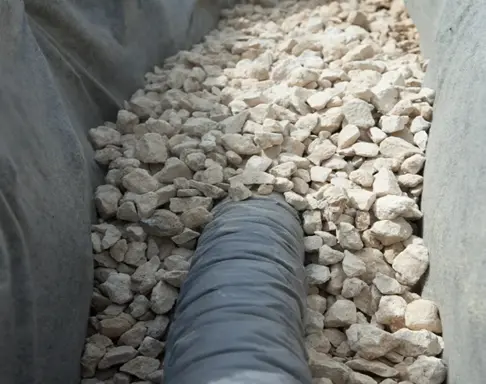
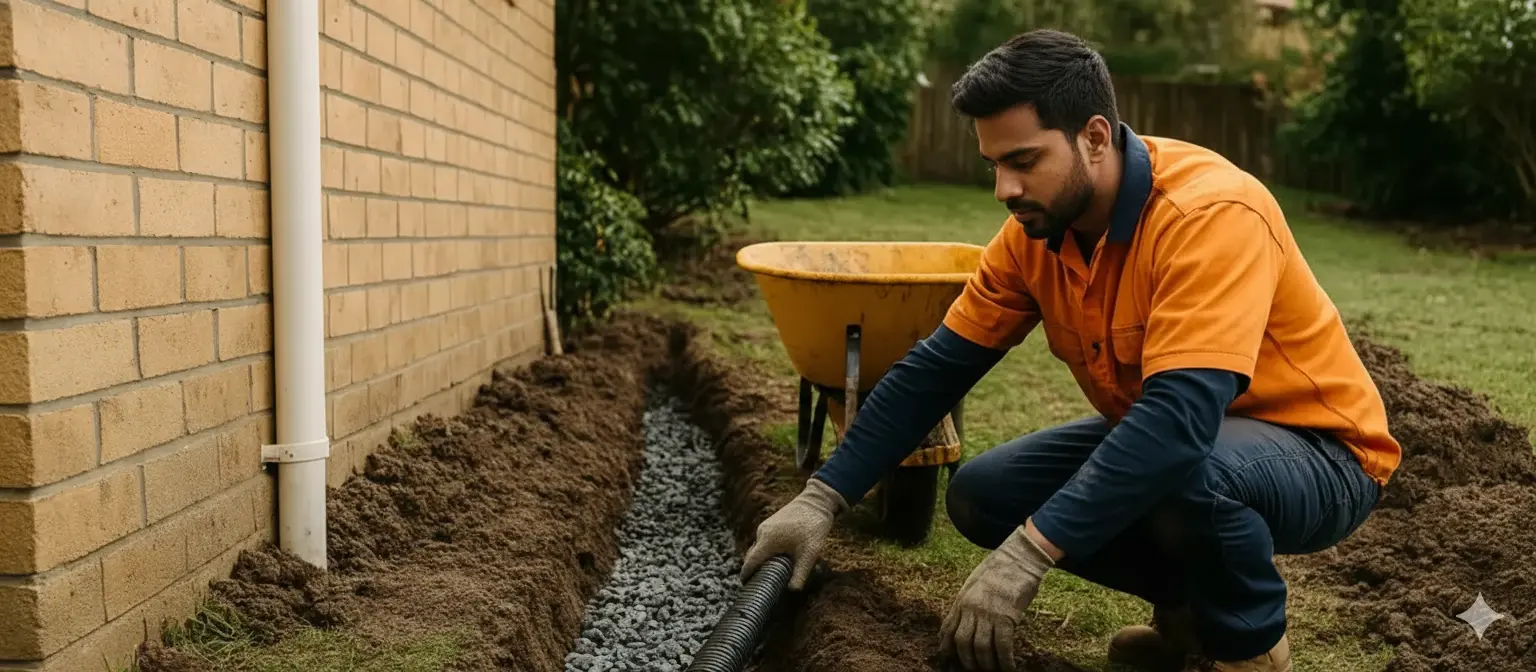
Subsoil drainage is an underground water-management solution designed to control excess groundwater that collects beneath the surface, particularly in clay-heavy or low-lying landscapes. By installing perforated pipes surrounded by filtered drainage gravel, the system lowers the water table and relieves soil saturation that surface drains cannot address. This prevents root damage, lawn sponginess, erosion, and pressure against building foundations. Engineered with precise gradients and integrated discharge points, subsoil drainage works invisibly below ground to keep your landscape firm, healthy, and usable year-round.
What is Subsoil Drainage?
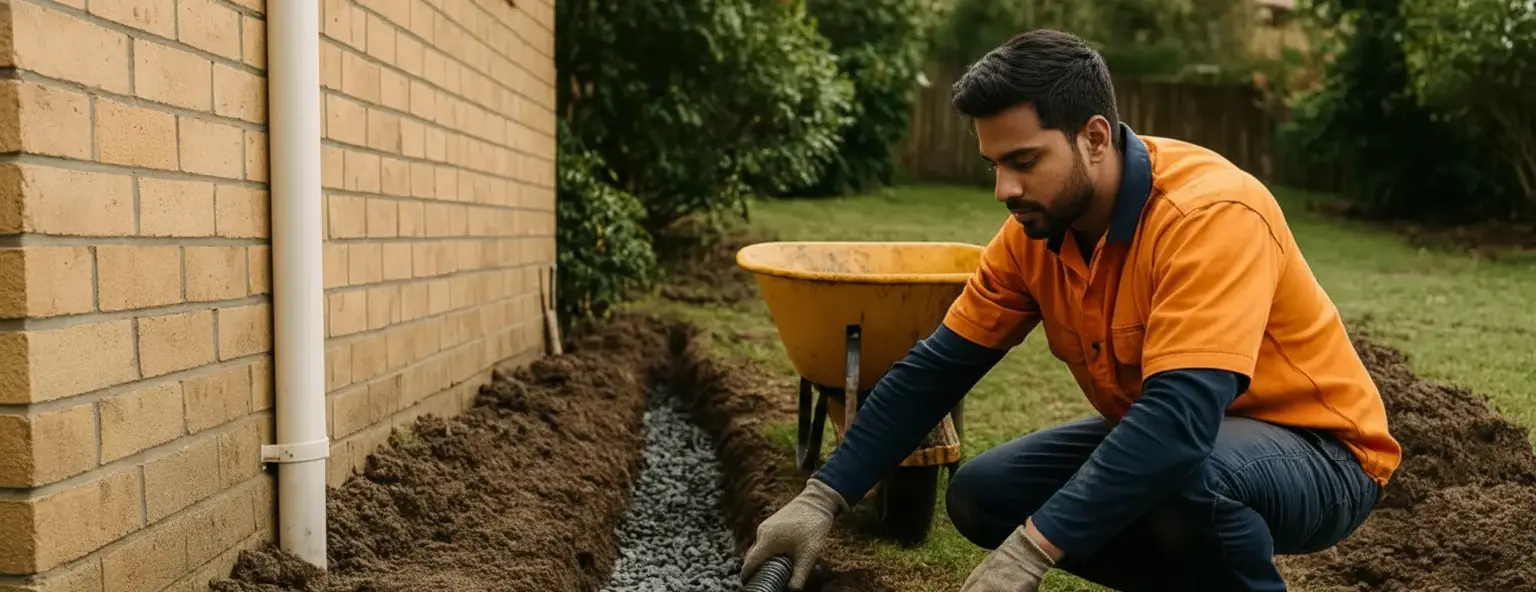
Subsoil drainage is an underground water-management solution designed to control excess groundwater that collects beneath the surface, particularly in clay-heavy or low-lying landscapes. By installing perforated pipes surrounded by filtered drainage gravel, the system lowers the water table and relieves soil saturation that surface drains cannot address. This prevents root damage, lawn sponginess, erosion, and pressure against building foundations. Engineered with precise gradients and integrated discharge points, subsoil drainage works invisibly below ground to keep your landscape firm, healthy, and usable year-round.
Why Your Landscape Depends on Subsoil Drainage
Professional subsoil drainage protects both your landscape and your property by removing excess groundwater trapped beneath the surface. By restoring oxygen to the soil, it prevents root suffocation, plant disease, and the spongy lawn effect common in clay soils and sloped sites. At the same time, it reduces hydrostatic pressure that can damage foundations, retaining walls, and paved areas. The result is a stable, healthy, and usable garden that remains resilient and functional in all weather conditions while safeguarding your long-term investment.
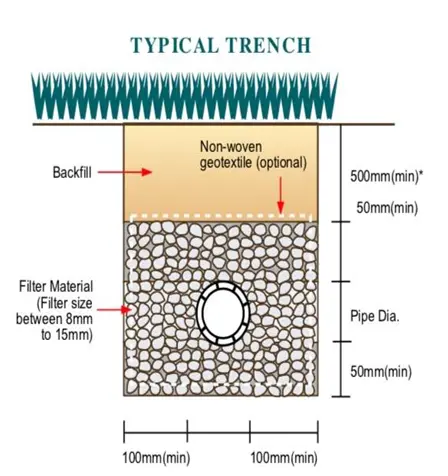
How's Process Works
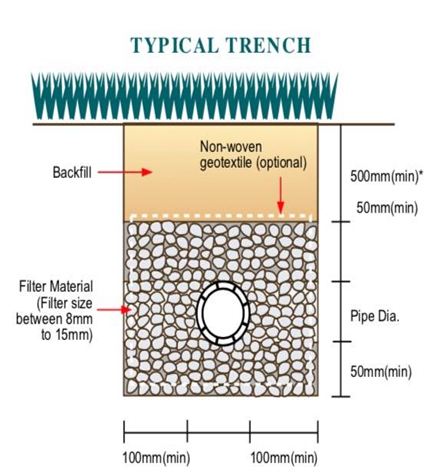
Begin with site assessment to map water flow, soil type, and trench layout, ensuring a 1% minimum slope for gravity drainage. Excavate 12-18 inch deep trenches, line with geotextile fabric, add 3-4 inches of gravel, lay perforated pipe (holes down), cover with more gravel, and backfill with soil before compacting and reseeding. Test flow and connect to outlets like dry wells or ditches for full functionality.